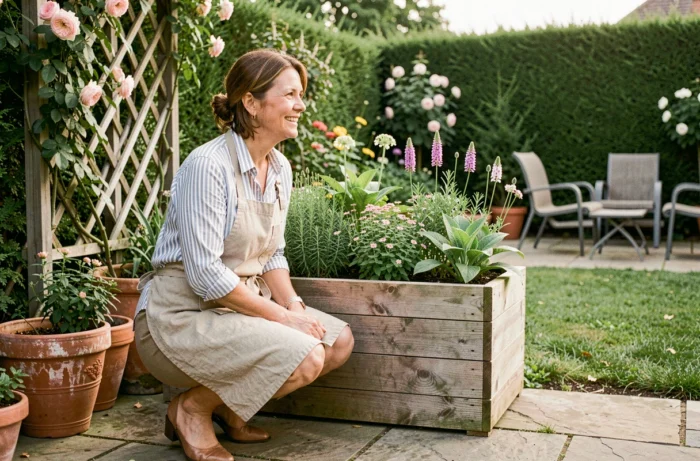
Designing an elegant and welcoming garden does not rely on a plant catalog or a unique style. The outcome depends on precise structural choices: the type of flooring, the proportion between planted areas and inert surfaces, the presence or absence of a water feature, and the level of maintenance one is willing to accept. This article compares approaches that work and those that lead to disappointment, based on design trends observed in 2026.
Naturalistic garden or structured garden: what each approach entails on a daily basis
The 2026 trends highlight a naturalistic style, with dense plantings combining grasses and perennials, rather than geometric flower beds and closely mown lawns. This evolution, visible at major garden events this year, changes the way we conceive an elegant outdoor space.
A classic structured garden (trimmed hedges, sharp borders, uniform grass) requires regular interventions: weekly mowing, hedge trimming several times a season, weeding of flower beds. The naturalistic garden reduces these tasks but imposes other constraints: precise choices of plant associations, acceptance of a deliberately “wild” appearance for part of the year.
| Criterion | Structured garden | Naturalistic garden |
|---|---|---|
| Weekly maintenance | High (mowing, trimming, weeding) | Moderate (monitoring, targeted watering) |
| Winter appearance | Bare if annuals | Dry grasses, persistent silhouettes |
| Biodiversity | Low to medium | High (insects, birds, pollinators) |
| Installation cost | Variable (grass + hedges + borders) | Comparable (perennials + grasses + mulching) |
| Perceived elegance | Immediate, formal | Progressive, seasonal |
The choice between these two approaches determines all subsequent decisions: furniture, coverings, lighting. A resin wicker garden set does not fit well in a bed of tall grasses. Conversely, a raw wood bench seems out of place on a patio with calibrated stone slabs.
To explore equipment and furniture suitable for these two styles, you can find ranges that cover both classic layouts and more contemporary atmospheres on the Tradition Jardin website for the garden.
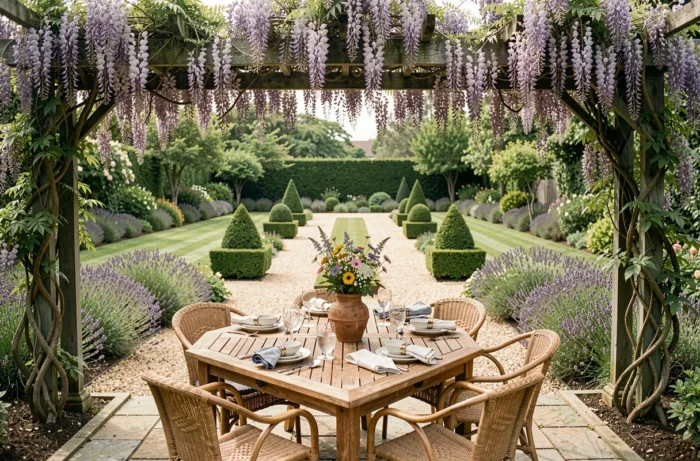
Water feature and micro-habitats: an underestimated lever for the garden’s ambiance
Several specialized sources published in 2026 emphasize the growing importance of small water features in garden design. A simple pond, a stone trough, or a small water reserve is enough to transform the atmosphere of an outdoor space.
A water feature attracts amphibians, dragonflies, birds, and pollinating insects. During hot and dry periods, it becomes a refuge for local wildlife. The visual effect is immediate: the reflective surface creates depth, and the movement of water (even subtle) adds a sound dimension that neither plants nor furniture can provide.
Sizing a water feature according to the available space
In a small garden or on a balcony, a basin of a few dozen centimeters in diameter is sufficient. In a larger area, a shallow buried pond, bordered by flat stones and semi-aquatic plants, creates a natural focal point.
- Stone basin or trough: suitable for terraces and small spaces, requires regular water changes to prevent stagnation
- Shallow buried pond: hosts aquatic plants (water lilies, irises) and promotes local biodiversity
- Closed-loop fountain: provides the sound of water without excessive consumption, works on reduced surfaces
The water feature effectively replaces a static decorative element like a statue or oversized pot. It evolves with the seasons and draws attention effortlessly.
Unmown areas and dead wood: integrating biodiversity without sacrificing elegance
The design of wildlife-friendly gardens is gaining ground in 2026. Recent gardens incorporate elements such as hedges of local species, dead wood left in place, intentionally unmown corners, and small ponds. Biodiversity becomes a full-fledged design criterion, not a cosmetic addition.
The idea of an “elegant” garden is evolving in this direction. A pile of dead wood placed in a corner, partially hidden by ferns, shelters insects and small mammals while remaining discreet. A band of flowering meadow along a fence replaces a monotonous hedge of thujas and offers staggered blooming from spring to autumn.
Visually delineating wild areas
The trap would be to leave the entire garden without structure. Elegance comes from the contrast between controlled areas and free zones. A mown lawn in the center, bordered by naturalistic beds and a band of meadow, creates a framing effect that enhances the overall readability.
- Mow a clear path through a tall meadow area to suggest a route
- Border unmown areas with a row of flat stones or wooden sleepers
- Group dead wood in one place (corner, back of the garden) rather than scattering it
- Plant tall perennials (echinacea, rudbeckia, asters) in transition between mown and free zones
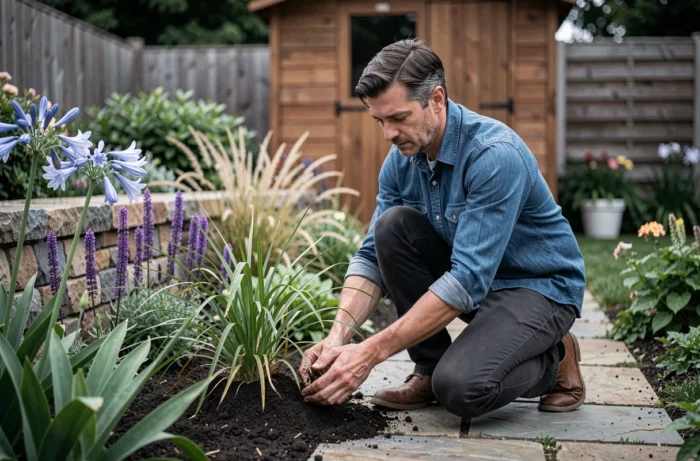
Dryness and water restrictions: adapting the layout to hot summers
Episodes of drought and watering restrictions are increasingly impacting French gardens. An elegant layout that relies on daily watering is no longer viable in the long term.
Thick mulching significantly reduces evaporation and limits the growth of weeds. An organic mulch (wood chips, bark, dead leaves) nourishes the soil as it decomposes. A mineral mulch (gravel, pumice) is better suited for Mediterranean or contemporary atmospheres.
The choice of plants makes a difference: plants adapted to dry soils (lavenders, sages, nepeta, grasses like stipa) maintain a beautiful appearance without watering once established. They naturally associate with the naturalistic style described above.
Reusing grey water in the garden
In France, the reuse of shower or dishwater for garden watering is subject to regulatory discussions. Some households are beginning to collect this grey water to maintain their plantings during restriction periods. A rainwater collector remains the simplest and most widespread solution to secure watering without relying on the mains.
A garden designed to withstand dry summers retains its appearance even in August, when traditional lawns turn yellow and annuals wither. This resilience, built from the planting stage, defines a truly sustainable layout, well beyond mere aesthetic considerations.