When receiving an order of 30 polos for a sports event that needs to be delivered in ten days, the choice of printing technique makes all the difference: lead time, finish, unit cost, and wash durability. Not all garment printing techniques are equal, and choosing the wrong one can mean paying twice.
DTF on textiles: the technique that reshuffles the cards in small series
Most comparisons line up screen printing, flocking, and embroidery without mentioning the shift the market has taken over the last two years. DTF (Direct to Film) has emerged as the most flexible solution for short runs, typically between 50 and 100 pieces.
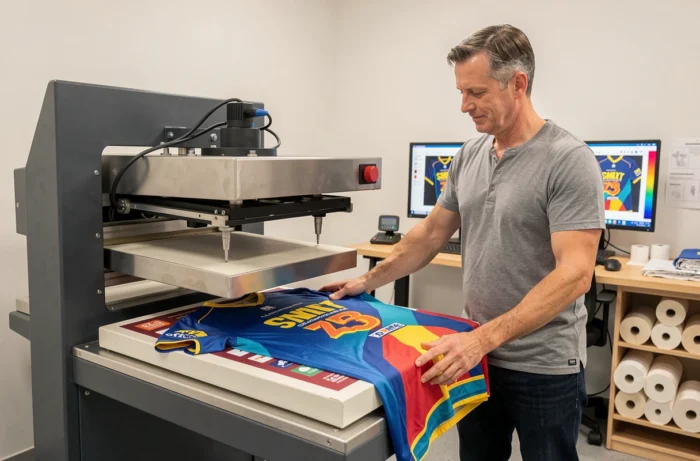
The principle: we print the design on a PET film with pigment inks, apply a heat-activated powder, and then press the transfer onto the textile. No color registration, no frame to prepare. A complex design in four colors costs the same to produce as a monochrome logo.
In practice, DTF handles difficult textiles (polyester, nylon, thick cotton) where direct-to-garment printing (DTG) often requires pre-treated light cotton. For e-commerce brands and print-on-demand businesses, this makes a difference when looking for more information on Mamzelle H regarding the choice between these processes.
Textile screen printing: profitable from what quantity
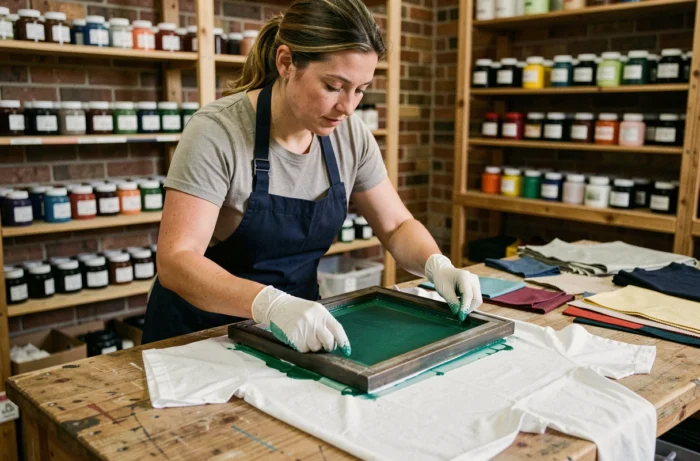
Screen printing remains the benchmark for large runs. Ink is pushed through a screen (a stencil stretched on a frame) onto the fabric, color by color. Each additional color requires a dedicated screen, which increases preparation time.
This setup time directly impacts the unit price of small orders. However, once the screens are ready, the cost per piece drops drastically as the quantity increases. For a two-color logo on several hundred t-shirts, screen printing outperforms all other techniques in terms of value for money.
Color retention and limits
The ink penetrates the fibers instead of sitting on the surface. The result: colors retain their brightness wash after wash, far beyond what a standard flocking offers. The limit is graphic complexity. A photo-realistic gradient would require too many screens to remain economically viable.
Flocking and sublimation: two printing techniques for specific uses
Flocking and sublimation often appear in quotes, but they are frequently confused. They respond to very different constraints.
Textile flocking: raised touch and sharp cut
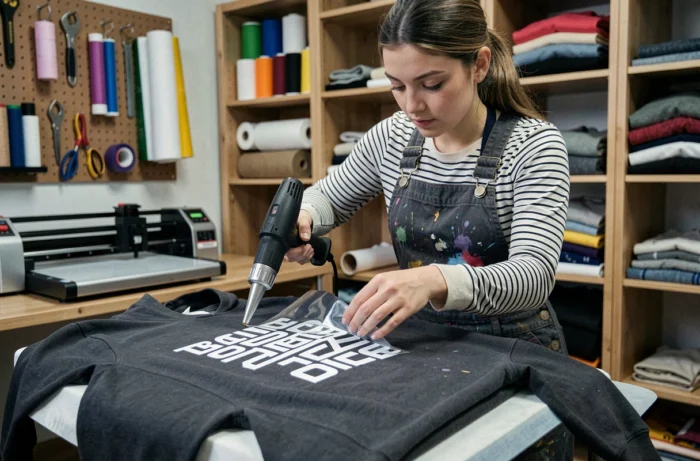
Flocking involves cutting a design from a heat-activated vinyl and then pressing it onto the garment. You get a matte or glossy finish, slightly raised. This technique is perfect for names, numbers, and simple logos.
- Suitable for single pieces or very small runs (sports jerseys, personalized gifts)
- Limited in color count: each shade requires a separate cut
- Decent wash resistance, but the vinyl can crack after several dozen cycles if the initial pressing is not optimal
Sublimation: vibrant colors on polyester
Sublimation uses heat to turn ink into gas, which penetrates directly into polyester fibers. The design becomes an integral part of the fabric, with no perceptible thickness to the touch.
A major constraint: sublimation only works on light textiles with a high polyester content. A 100% black cotton t-shirt is simply incompatible. On a white running jersey or a polyester tote bag, however, the result is remarkable, with saturated colors and nearly unlimited durability.
Embroidery on garments: when durability takes precedence over cost
Where all printing techniques deposit ink or a film, embroidery works with thread. A digital program controls the machine that stitches the design directly into the fabric. This process gives a high-end, tactile finish that withstands everything: industrial washes, abrasion, prolonged sun exposure.
It is logically found on professional clothing (company polos, medical scrubs, caps) where the logo needs to last for several years. The production cost per piece is higher than screen printing or DTF, and very detailed visuals do not translate well: a photographic gradient is simply impossible in embroidery.
- Premium finish suitable for corporate logos and fashion brands
- Excellent longevity, including in industrial washing
- Limited embroidery area (beyond a certain size, the fabric stiffens and costs skyrocket)
- Longer production time than transfer printing techniques
Choosing your textile printing technique based on the project
Rather than searching for the best technique in absolute terms, you save time by starting from three concrete criteria.
| Criterion | Small run (less than 50 pieces) | Large run (several hundred) |
|---|---|---|
| Lowest unit cost | DTF or flocking | Screen printing |
| Complex visual (photo, gradients) | DTF or sublimation (polyester) | DTF |
| Maximum durability | Embroidery | Screen printing or embroidery |
The type of textile weighs as much as the quantity. A dark pique cotton polo will lean towards DTF or embroidery. A white technical polyester jersey will open the door to sublimation. The right reflex is to request a sample before validating a full series, especially on a fabric you have never worked with.
Feedback varies on the actual longevity of DTF after numerous intensive washes, as the technique is still relatively new on a large scale. On classic textiles and with well-adjusted pressing, the observed results remain very satisfactory. The textile customization market is evolving quickly, and the techniques that dominate small runs are no longer the same as five years ago.