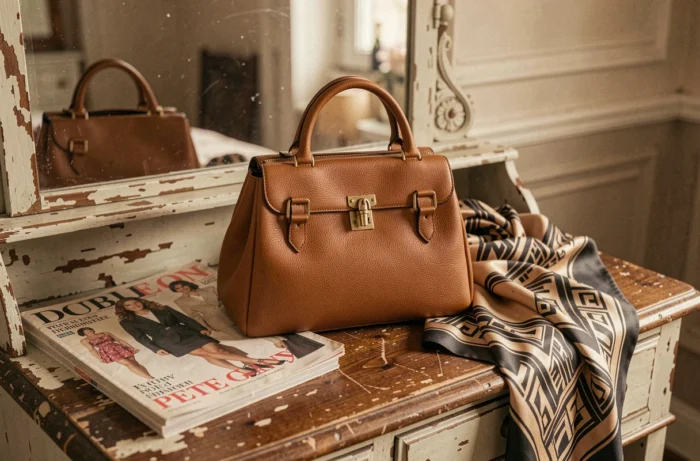
The Double M bag from the 90s circulates on vintage resale platforms without any specialized source documenting its origin, its creator house, or its current value. This lack of reliable traceability distinguishes this model from the widely referenced icons of vintage luxury. Understanding what separates a niche bag from a documented classic allows for a better evaluation of what one is actually purchasing in the second-hand market.
Vintage Double M bag: a model absent from specialized listings
The selections of iconic vintage bags consulted by experts cite the Timeless from Chanel, the Lady Dior, or the Fendi Baguette. The Double M does not appear on any of these lists. This observation does not mean that the model lacks interest, but it places its status in a different category: that of confidential pieces whose value relies more on aesthetic appeal than on a verifiable market price.
To learn everything about the Double M bag, one must accept this documentary reality. Reseller catalogs display prices, but no historical sales confirm an upward trend. An online inventory does not constitute proof of demand.
This distinction matters for buyers investing in vintage with hopes of a profit. A bag referenced by auction houses benefits from a traceable history. The Double M, on the other hand, remains subject to supply and demand on less structured platforms.

90s vintage bags: comparing the Double M to documented models
The 1990s produced several simultaneous aesthetics (minimalism, grunge, streetwear, BCBG, pop influences). A bag presented as dating from this period may stem from original production, a reissue, or simple later inspiration. The label “90s” is not enough to authenticate a piece.
| Criterion | Documented bag (e.g., Fendi Baguette, Lady Dior) | Niche bag (e.g., Double M) |
|---|---|---|
| Verifiable origin | Identified house, launch date, designer | Fragmentary or absent information |
| Market price | Consultable auction sales history | Reseller catalog prices only |
| Presence in specialized media | Referenced in books and exhibitions | Absent from generalist selections |
| Counterfeit risk | Authentication guides available | Few published benchmarks for verification |
| Resale potential | Measurable and recurring demand | Difficult to quantify demand |
This table highlights a structural gap. Documented models benefit from a complete ecosystem (expertise, literature, public sales) that secures the purchase. The Double M operates outside of this ecosystem, making any value estimation more speculative.
Authenticating a retro bag: concrete pitfalls to check
The absence of published authentication guides for the Double M creates a practical difficulty. On second-hand platforms, descriptions often limit themselves to cosmetic condition and dimensions. They do not provide technical benchmarks to confirm authenticity.
Before purchasing a vintage niche model, several points deserve systematic verification:
- The consistency between the materials used and the manufacturing techniques common in the claimed decade. An anachronistic leather or hardware signals a reissue or a counterfeit.
- The presence of a serial number, a manufacturing label, or an internal marking. The complete absence of internal marking is a warning sign for a bag presented as coming from a house.
- The provenance declared by the seller. A certificate of authenticity issued by the seller themselves does not hold the same value as an independent appraisal.
- The condition of the seams, lining, and fasteners. The artisanal finishes of the 90s exhibit different characteristics from recent industrial productions.
These checks apply to any vintage bag, but they become particularly necessary when the model lacks accessible documentation.
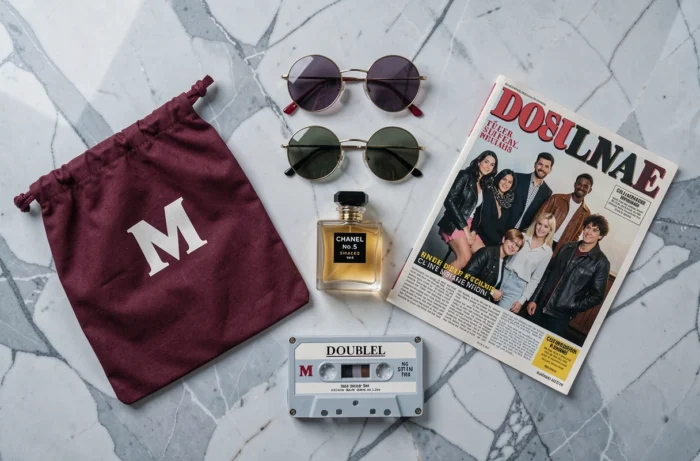
Retro fashion and vintage trend: what truly determines a bag’s value
The cyclical return of 90s silhouettes in contemporary collections fuels a general enthusiasm for retro style. Houses like Miu Miu or Balenciaga regularly reinterpret codes from this decade, stimulating demand in the second-hand market. The trend primarily benefits identifiable and widely publicized models.
A bag whose name circulates on Instagram and in fashion media benefits from a network effect that supports its value. In contrast, a confidential model like the Double M depends on a small circle of connoisseurs. This difference in exposure has direct consequences on liquidity: quickly reselling a less referenced bag remains more difficult than selling a recognized model.
The appeal of vintage fashion is not limited to speculation. Many buyers seek a unique style, a piece that no one else is wearing. The Double M fits this logic. Its rarity on the market constitutes both its appeal and its limitation: it attracts those who prioritize originality, but it does not guarantee the same financial security as a documented classic.
Buyer profile and actual use
The choice between a documented vintage bag and a niche model depends on the purchasing intent. A buyer looking for a stylish accessory without the goal of resale may find in the Double M an authentically retro piece at a cost likely lower than listed icons. A collector aiming for profit would do well to turn to models whose value trajectory is measurable.
The Double M bag from the 90s illustrates a reality of the vintage market often underestimated: the notoriety of a model weighs as much as its quality in determining its price. A well-made bag, worn with style, can accompany looks for years without ever appearing in an auction catalog.