
A GPS bracelet for children allows you to know their position in real-time from a mobile application. The principle is simple: the child wears a small device on their wrist, and the parent receives a notification as soon as they leave a predefined area. Three criteria guided the selection for this ranking: the reliability of geolocation, battery life, and ease of use for a child.
1. PAJ Smartwatch Finder 4G
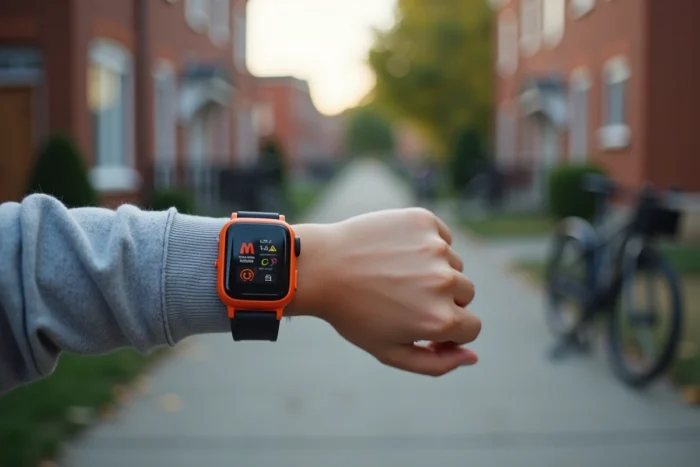
The PAJ Smartwatch Finder 4G combines the functions of a smartwatch and a GPS tracker. It operates on the 4G network, which improves tracking accuracy compared to models limited to Bluetooth.
Its main advantage: the ability to send voice messages between the child and the parent. The child presses a button, records for a few seconds, and the message arrives on the parent’s phone. The watch also includes a fall alert, useful for younger children.
Live tracking covers over 100 countries according to PAJ, with a route history kept for 365 days. This level of detail helps to identify movement habits and adjust safety zones. In return, usage requires a monthly subscription to the PAJ portal.
To compare the different models available, you can check the GPS bracelets for children on Ouaps.
2. Bip Connect Smart Bip
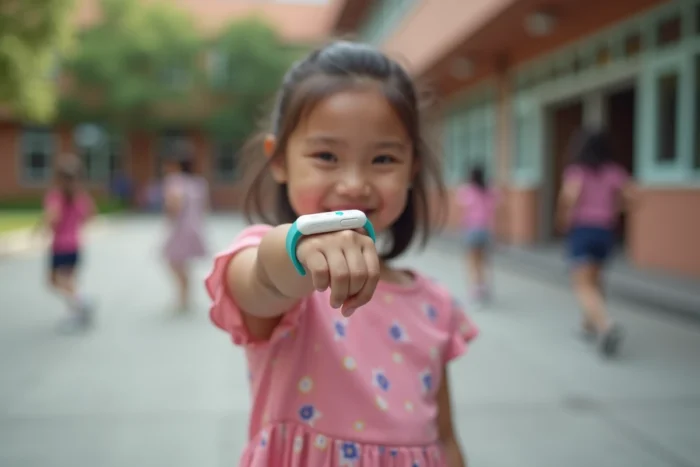
The Smart Bip from Bip Connect is not a watch, but a small device that the child can wear as a bracelet, pendant, or slip into a pocket. An SOS button sends an immediate alert to parents with the exact location via SMS.
Its geolocation works without distance limits, unlike Bluetooth trackers that lose signal beyond a few dozen meters. The Smart Bip also offers entry and exit zone detection: you define a perimeter (school, park, home) and receive a notification as soon as the child crosses it.
It comes in several colors, making it easier for the child to accept. A device that the child refuses to wear is useless, regardless of its technical level.
3. Apple AirTag in a suitable bracelet
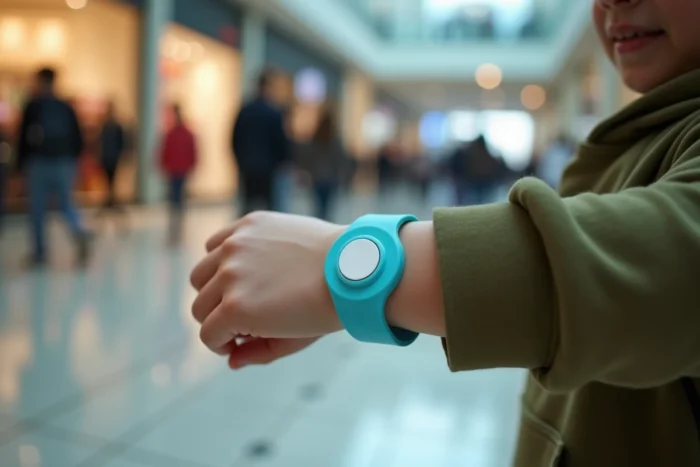
The Apple AirTag is not sold as a child GPS bracelet, but many parents use it this way by slipping it into a compatible bracelet holder. It leverages Apple’s Find My network, providing very broad coverage in urban areas.
Note: the AirTag relies on Bluetooth and the network of Apple devices, not pure GPS. In rural or sparsely populated areas, the location becomes significantly less accurate. It offers neither an SOS button nor voice communication. It is a complementary solution for parents already equipped with Apple devices, not a standalone security device.
4. Xplora X6 Play
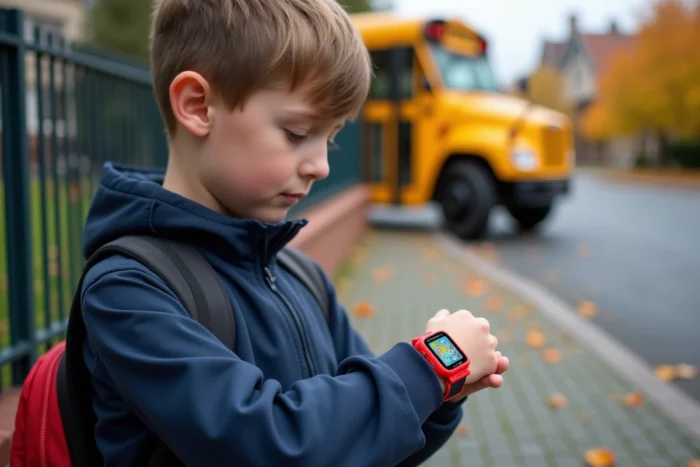
The Xplora X6 Play is a GPS watch designed for children who want an object similar to their parents’. It allows calls, messages, and real-time geolocation.
The secure zones feature alerts the parent if the child leaves a defined perimeter. The touchscreen is intuitive enough for a six-year-old to use without assistance. The watch also includes a “school” mode that disables fun functions during class hours.
The weak point remains battery life: with active use, the battery rarely lasts more than a full day. Charging every evening is necessary.
5. Weenect Kids
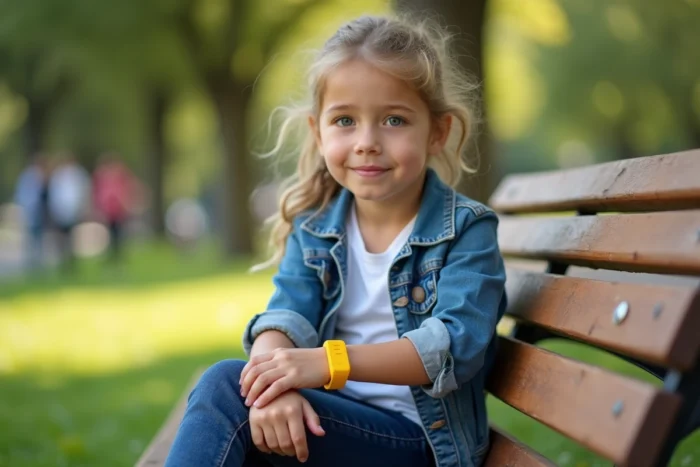
Weenect Kids is a small GPS device that can be attached to a bag, belt, or wrist via a dedicated accessory. It operates on the GSM network, ensuring national coverage without relying on Bluetooth.
- Real-time geolocation with updates every few seconds
- SOS button that triggers a call to the registered number
- Movement history accessible from the app
- Configurable zone alerts (entry and exit)
The Weenect Kids requires a subscription to access tracking. Without an active subscription, the device transmits no data, which is something to anticipate in the budget.
6. AOWOKA Kids Tracker
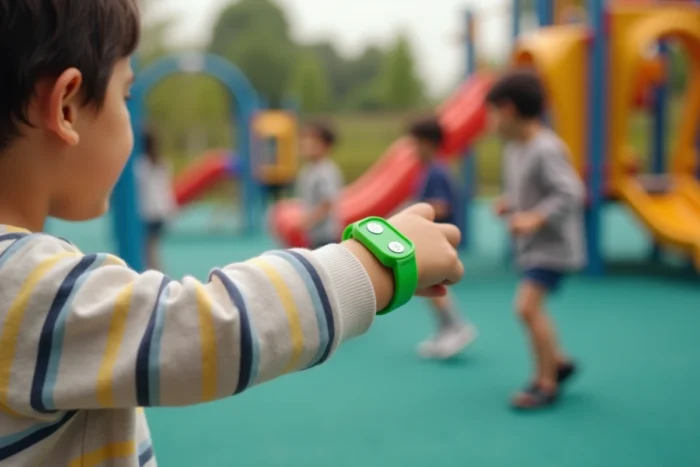
The AOWOKA tracker presents itself as an entry-level GPS bracelet. It offers real-time location and an emergency call button. Its colorful and lightweight design makes it easy for young children to wear.
Its limitation is its dependence on the 2G network, which is being dismantled in several European countries. Before purchasing, check network compatibility with your operator. A GPS bracelet incompatible with the local network becomes a mere decorative accessory.
For a tight budget and occasional use (holidays, park outings), it may suffice. For reliable daily tracking, 4G models are more sustainable.
7. Samsung SmartTag2 in a bracelet
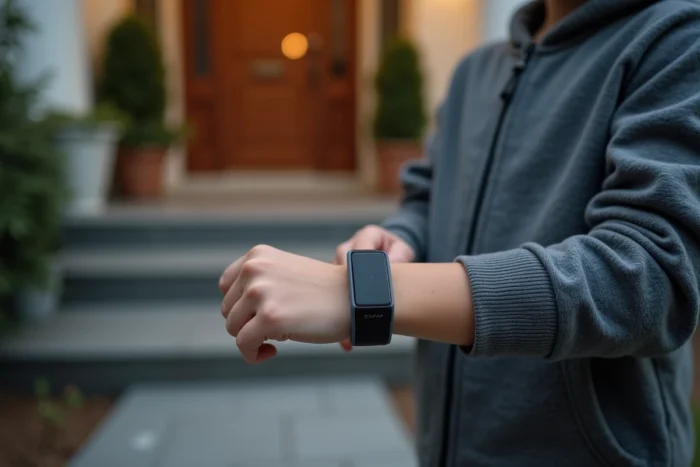
Like the AirTag, Samsung’s SmartTag2 is a Bluetooth tracker repurposed as a child bracelet thanks to suitable cases. It uses the SmartThings Find network, Samsung’s equivalent of Apple’s network.
The Bluetooth range remains limited, but the density of Samsung devices in circulation improves the network in urban areas. The SmartThings app allows you to set separation alerts: the parent’s phone vibrates if the child moves beyond a certain distance.
As with the AirTag, there is no SOS button or calling function. This type of tracker is suitable for keeping an eye on in dense urban environments, not for securing a child alone.
Each GPS bracelet serves a different purpose. 4G smartwatches offer the most features, while Bluetooth trackers like the AirTag or SmartTag2 remain supplementary solutions. Testing the device for a few days before adopting it for daily use is the best way to ensure it truly provides you with peace of mind.