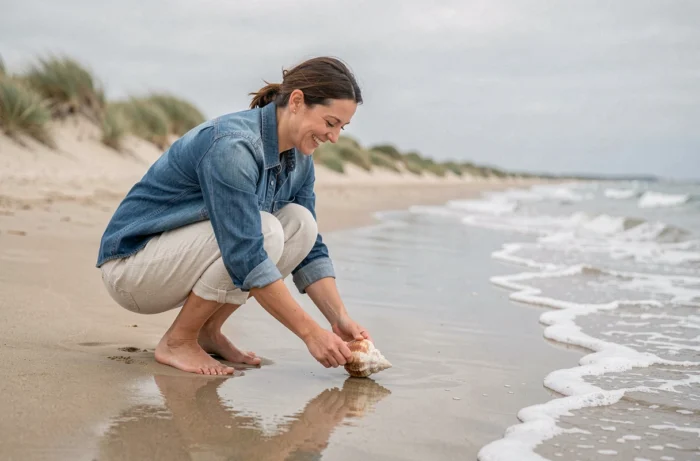
The Landes coastline features a nearly continuous sedimentary profile of fine sand over more than a hundred kilometers, which clearly distinguishes it from the rocky coasts of Brittany or the muddy flats of Charente. This apparent homogeneity conceals very localized micro-habitats, which are the only ones capable of concentrating shellfish in sufficient quantities to justify a collection outing.
Foreshore and Landes micro-habitats: reading the substrate before choosing a spot
On a bare sandy beach battered by the Atlantic swell, the density of shellfish remains low. The productive areas in the Landes are where the foreshore presents a substrate break: exposed rocky banks, sand-mud transition zones near a freshwater current, or accumulations of seaweed on the strandline.
Capbreton offers this configuration thanks to the gouf, a submarine canyon that alters the bottom currents and promotes the deposition of shells on Notre-Dame beach. The foreshore reveals portions of rock and compact sand at low tide where clams and small cockles can settle.
We recommend checking the tide schedules for coefficients above 90, which expose areas that are normally submerged. It is on these low foreshore bands that living shellfish are accessible, and not on the upper beach where only empty shells accumulate.
In Biscarrosse, the southern beach towards the dune area occasionally presents shellfish banks after strong swell episodes. The sand is churned deeply, bringing buried clams to the surface. In Hossegor, the marine lake area and its channel connecting to the ocean create a brackish environment favorable to clams and cockles, much more so than the ocean beach itself.
Several field references detailing these spots are compiled on the La Top Liste website, which distinguishes beaches according to their actual collection potential.
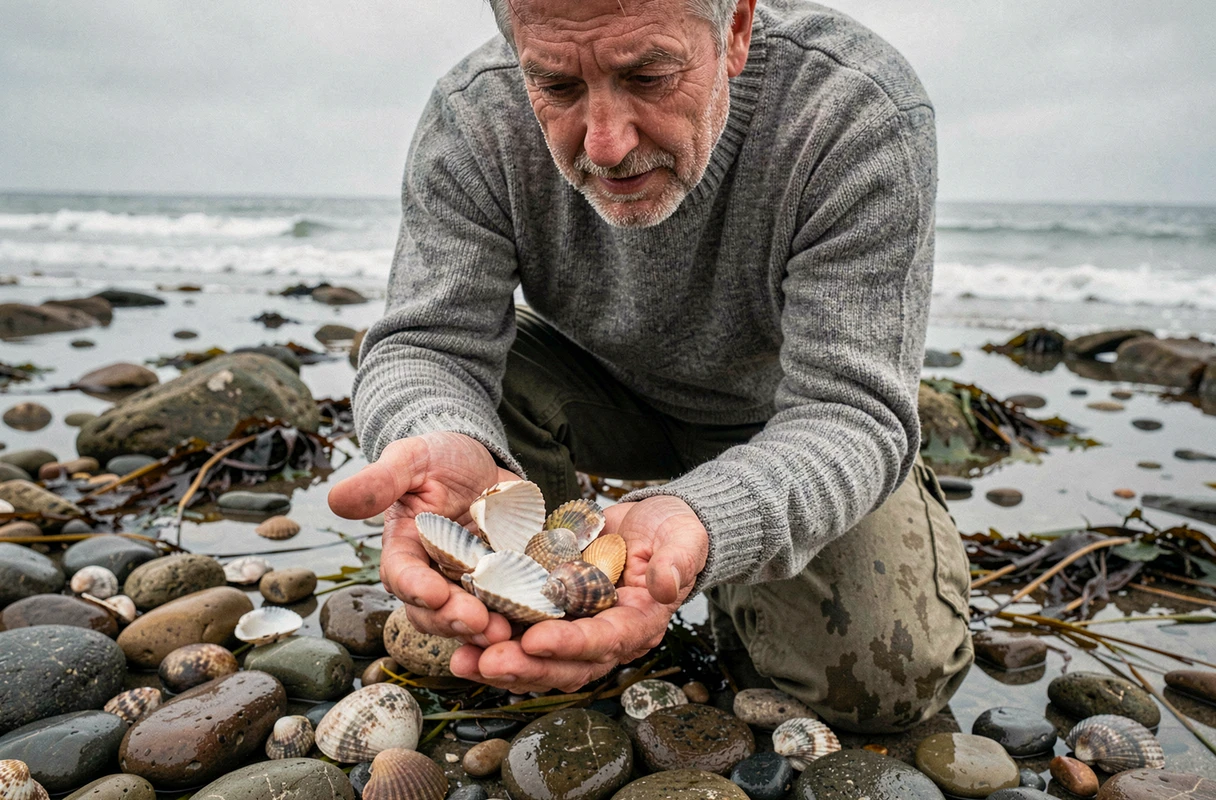
Shellfish collection or shore fishing in the Landes: the regulatory framework that changes everything
Collecting empty shells and practicing shore fishing for living shellfish fall under two distinct legal regimes. Confusion between the two remains common, even in tourist guides.
Recreational shore fishing (clams, cockles, razor clams) is regulated by prefectural orders that set minimum capture sizes, maximum quantities per person per day, as well as opening periods. In the Landes, these orders are published by the Departmental Directorate of Territories and the Sea.
The simple collection of empty shells on the strandline is generally tolerated in small quantities for personal use. However, massive harvesting may fall under regulations concerning the extraction of natural materials from the public maritime domain.
- Living clams and cockles: subject to a minimum capture size and a daily quota per fisherman, varying according to the current order
- Empty shells (strandline): tolerated in small quantities for personal use, but prohibited for commercial collection
- Wild oysters: their collection is subject to health restrictions, particularly in cases of bacterial contamination reported by the ARS
- Sea urchins and periwinkles: regulated like traditional shore fishing, with seasonal closure periods
Before each outing, we advise checking the health bulletins of the relevant basin. Shore fishing areas may be temporarily closed due to microbiological contamination, without always being signposted on-site.
Health alerts and Portuguese man o’ war: adapting outings to real conditions
The summer of 2026 reminded us that the Landes coastline is not neutral territory. In early August, several beaches in the Landes were closed to swimming after an invasion of Portuguese man o’ war, these hydrozoans often confused with jellyfish whose contact causes severe burns.
Washed-up Portuguese man o’ war on the foreshore pose a direct danger to shellfish collectors walking barefoot or digging in the sand with bare hands. The stinging filaments remain active for several hours after stranding.
The official instructions are clear: do not touch washed-up animals and report their presence to the lifeguard station. In practice, this means that a shellfish outing on a beach affected by a Portuguese man o’ war alert should be postponed, even if the beach is not formally closed to pedestrians.
Episodes of cyanobacteria proliferation have also led to beach closures in the Landes in July 2026, affecting the quality of coastal waters. These alerts are published by the ARS Nouvelle-Aquitaine and relayed by the municipalities.
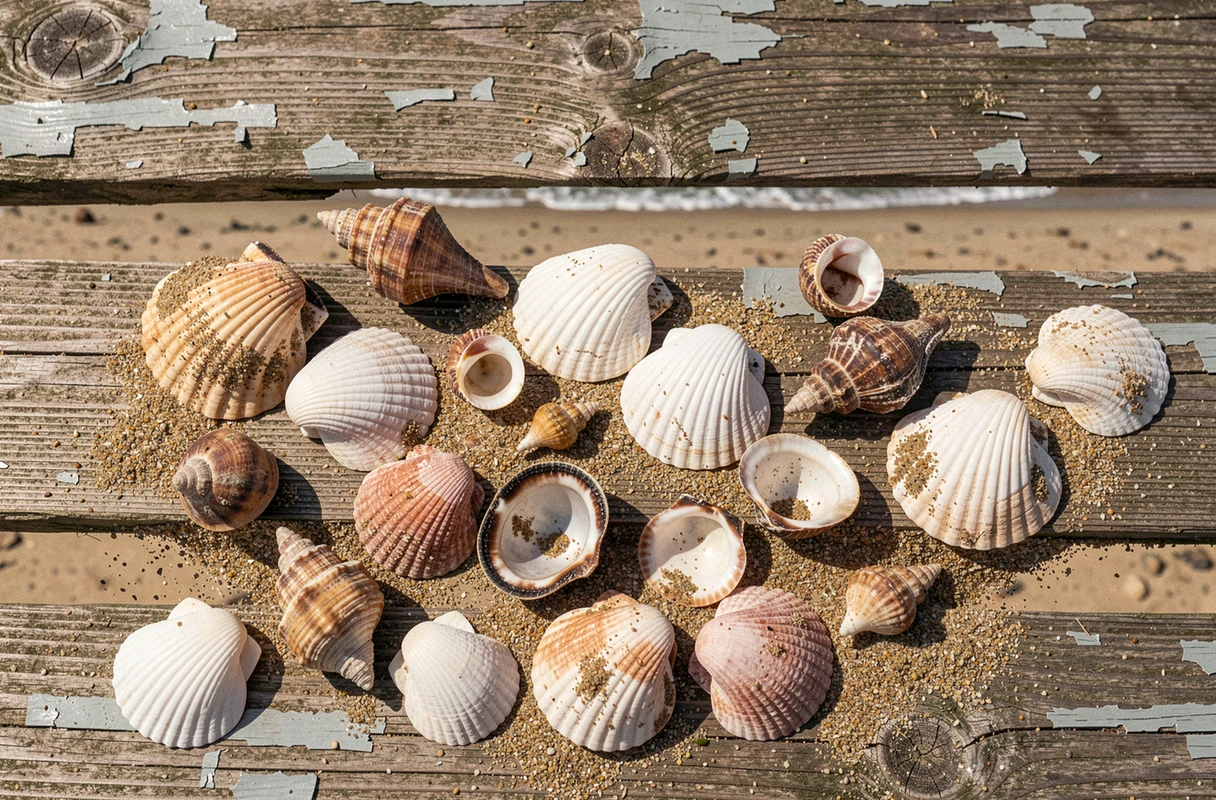
Preferred Landes spots according to the type of shellfish sought
The choice of site directly depends on the targeted species. Open ocean beaches mainly yield clams and donax (tellins), while sheltered areas near ponds and freshwater currents concentrate cockles and razor clams.
Capbreton and Notre-Dame beach
The influence of the underwater gouf creates a varied foreshore. At low tide with a high coefficient, the compact sandbanks south of the jetty reveal clams in appreciable density. Empty shells are also abundant there, carried by the currents of the canyon.
Hossegor, marine lake side
The Hossegor lake connects to the ocean via a channel that maintains a brackish environment. The muddy edges of the lake, accessible on foot, harbor clams and cockles in a soft substrate. This area is more productive than the ocean beaches of the same municipality for shore fishing.
Moliets-et-Maa and the Huchet current
The mouth of the Huchet current, which connects Lake Léon to the ocean, creates a sand-mud transition zone conducive to filter-feeding shellfish. The beach of Chênes-Lièges nearby benefits from regular shell deposits after storms.
Contis-Plage
Less frequented, Contis beach presents accumulations of shells on the strandline after high tides. This is a spot suitable for collecting empty shells rather than for shore fishing, as the substrate is mainly sandy without rocky structure.
Collecting shellfish in the Landes requires going beyond a simple list of beaches to understand what truly concentrates the shells: a substrate break, a current, an estuary. Checking health alerts and tide coefficients before each outing remains the only reliable method to return with a full bucket, without unpleasant surprises.