A parent who starts forgetting their medications, a neighbor who hesitates to go out for fear of falling down the stairs: it is often a trivial incident that triggers the search for health and wellness solutions for a senior. Staying at home remains the majority choice in France, but it requires a combination of services, technical aids, and prevention that few families master from the outset.
Home autonomy services: a reform that changes the game for seniors
Since 2024-2025, France has initiated a revamp of home assistance by creating a unique category called home autonomy services (SAD). This grouping is gradually replacing the old SAAD, SSIAD, and SPASAD, which were previously compartmentalized.
In practical terms, a single service can now provide daily activities (getting up, bathing, meals, shopping), offer home care, and organize prevention actions. There is no longer a need to juggle between three different structures for one elderly person.
The key point that changes the logic of support: prevention services accessible without dependency conditions. Balance workshops, nutrition programs, cognitive stimulation, these initiatives are now open to seniors who are still autonomous. The idea is to intervene before a fall, before the loss of bearings, not after. To better understand the available offerings, one can visit France Médicale for seniors and compare resources by territory.
Fall prevention and home safety: practical solutions that work
Falling remains the leading cause of accidental hospitalization among the elderly. The impact of home modifications is often underestimated.
Adapting the home before the accident
The most effective modifications are not necessarily the most expensive. Here are the ones that frequently come up in feedback from occupational therapists:
- Grab bars in the bathroom and toilet, fixed to the load-bearing wall (suction cup models can give way under body weight)
- Removal of door thresholds and unsecured rugs, which are responsible for a significant portion of trips at home
- Automatic motion-sensor lighting in hallways and staircases for nighttime get-ups
- Replacing the bathtub with a walk-in shower with a fold-down seat
These interventions often fall under the APA (personalized autonomy allowance) or MaPrimeAdapt’, depending on income level and degree of loss of autonomy.
Teleassistance and connected sensors
The classic alert pendant remains useful, but floor motion sensors can detect a fall even if the person cannot press the button. Several departments are experimenting with these devices as part of e-health programs. Feedback varies on this point, with some seniors struggling to accept the presence of sensors that they perceive as intrusive.
Adapted physical activities and social connections: two often overlooked pillars
There is much talk about care and technical aids. Less about what truly maintains autonomy over time: moving and socializing.
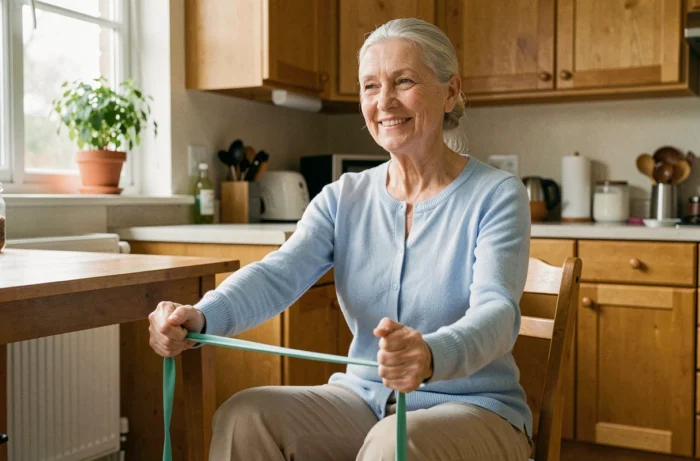
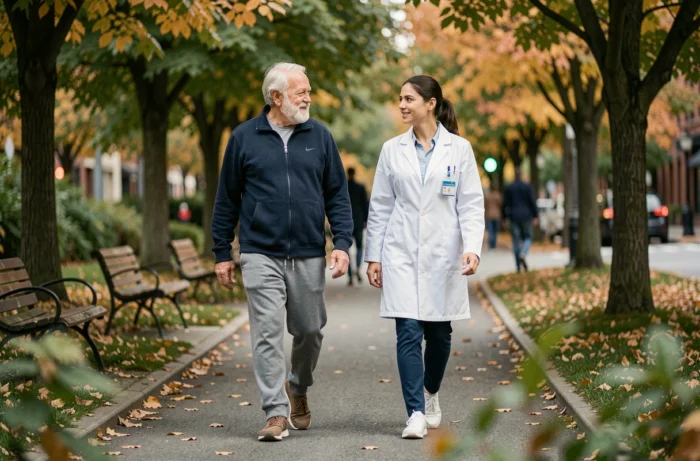
New-generation senior residences now integrate prevention programs directly into their service offerings. Gentle gym, guided Nordic walking, memory workshops: these activities are no longer reserved for medicalized structures. They are also offered through local associations and municipal social action centers (CCAS).
Social connection remains the most difficult factor to “prescribe.” Isolation exacerbates cognitive decline and sedentary behavior. The solutions that work are those that create a routine: a group class on Tuesday mornings, a shared garden, a weekly walking group. It may not be spectacular, but it is what keeps an elderly person active and connected to their neighborhood.
Coordination of caregivers and digital health tools
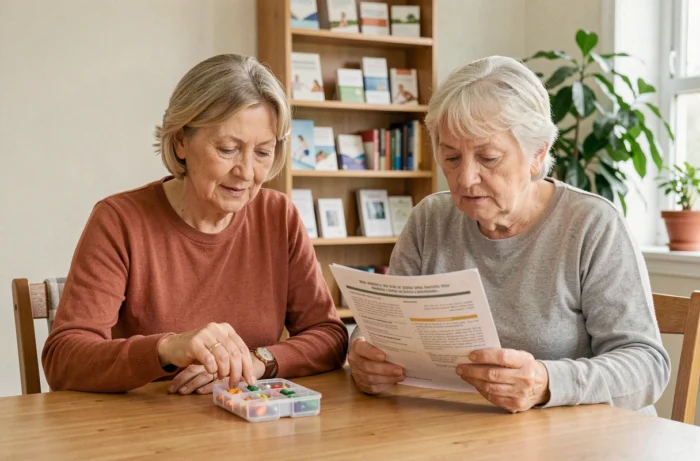
A senior receiving home care may deal with a primary care physician, a home nurse, a housekeeping service, a physiotherapist, and a pharmacist. Without coordination, information gets lost among the caregivers.
The deployment of the digital ESMS program aims to equip social-medical services with a shared computerized user file. The goal: for each professional to access the same history, alerts, and care instructions.
For family caregivers, coordination platforms allow for scheduling visits, reporting changes in health status, and sharing medical reports. These tools do not replace human contact, but they help avoid duplicates, missed appointments, and breaks in care continuity.
The role of family caregivers
Relatives provide the majority of daily support for seniors in France. Their exhaustion is a real risk. Respite care options (day care, temporary accommodation) and training offered by caregiver associations help to prevent burnout before it becomes an emergency.
Supporting a senior on a daily basis rarely relies on a single solution. It is the combination of an adapted home, local services, regular activity, and reliable coordination of caregivers that produces a lasting result. The most challenging part is not finding the services, but assembling them at the right time for the right person.